
Quick Summary
Automated driveway gates that fail to close or trigger false reversals typically suffer from malfunctioning gate safety sensors, creating severe entrapment hazards and code compliance issues. Drawing on over forty years of experience, Ironworks Gate Co. provides definitive technical expertise to diagnose, realign, and repair optical sensors affected by sun glare, heat, or wiring faults on the first visit. Readers will understand how UL 325 safety devices function, how to troubleshoot basic alignment errors, and how to schedule a free on-site gate safety sensor diagnostic and upfront estimate.
Gate Safety Sensors: Repair & Alignment
If your driveway gate stops halfway, reverses for no visible reason, or refuses to close when you press the remote, the issue almost always traces back to your gate safety sensors. While an open gate is an annoying security headache, a gate operating with failing safety devices is a serious physical hazard. According to historical data from the U.S. Consumer Product Safety Commission (CPSC), automatic gate systems without working reversing mechanisms or presence sensors were linked to severe injuries, including broken bones, deep hematomas, and amputations, as well as 32 fatalities between 1985 and 2001. As noted by Ironworks Gate Co., a functioning sensor system protects your family, guests, and vehicles every time the gate cycles.[1]
When safety sensors malfunction, professional diagnostics determine whether the failure stems from optical misalignment, underground wire corrosion, or internal board faults. Getting an accurate diagnosis on the first visit saves you from repeated service calls and keeps your entry secure.
Gate Safety Sensors Repair: Diagnostics and Solutions
Quick Summary: Driveway gate safety sensors are non-contact optical devices that project an infrared light beam across your driveway. When an obstruction breaks this beam while the gate is closing, applicable protection systems must stop or reverse gate movement within 2 seconds when an obstruction is detected. If your gate opens without issue but will not close, or clicks repeatedly at the control box, a misaligned photo eye or broken low-voltage wire is usually responsible.
Under safety standards established in UL 325, automated gate operators must include primary and secondary entrapment-protection methods. Applicable protection systems must stop or reverse gate movement within 2 seconds when an obstruction is detected. Monitored operators may restrict operation when required safety devices are absent, unrecognized, or malfunctioning, subject to the operator design and applicable requirements.[2]
Common Warning Signs Your Sensors Are Failing
You can spot a sensor problem early by watching for these symptoms:
- The gate opens but will not close: Pressing your clicker or keypad triggers a click in the motor housing, but the gate does not budge.
- Auto-reversal: The gate starts closing, travels a few inches or feet, and reopens.
- Flashing indicator LEDs: The diagnostic light on the receiving photo eye blinks or stays dark instead of showing a steady light.
- Intermittent failure: The gate operates inconsistently during different times of day.
At-a-Glance Safety Sensor Checklist
Before scheduling a service call, run through these basic checks:
- Clean the optical lenses with a soft, dry microfiber cloth to remove cobwebs, dust, and surface dirt.
- Check the indicator lights on both the sending and receiving units to ensure they indicate proper power and alignment per manufacturer specifications.
- Inspect the visible low-voltage wire run from the sensor bracket to the operator box, looking for physical damage, cuts, or pinched conduit.
- Clear tall weeds, overgrown shrubbery, or fallen tree limbs blocking the direct line of sight between the two posts.
How Do Automatic Gate Safety Sensors Work to Prevent Entrapment?
Modern driveway gates rely on continuous communication between the gate operator control board and the safety devices guarding the opening path.
UL 325 Entrapment Protection Standards Explained
The UL 325 safety standard addresses the hazards associated with automated gate operators. The CPSC identified that automated systems without reliable reversing mechanisms presented severe entrapment risks. Monitored operators may restrict operation when required safety devices are absent, unrecognized, or malfunctioning, subject to the operator design and applicable requirements.[3]
Primary and Secondary Entrapment Protection Methods
For covered vehicular gate operators, UL 325 uses primary and secondary entrapment protection, which may include:
- Non-Contact Sensors: Photoelectric sensors positioned across the path to detect obstacles. Photoelectric sensors are one accepted method among potentially applicable alternatives.
- Contact Sensors: Pressure-sensitive reversing edges mounted to the gate where applicable protection systems must stop or reverse gate movement within 2 seconds when an obstruction is detected.
- Inherent Reverse Systems: Internal sensor systems within the motor or drive mechanism that detect mechanical resistance if the gate strikes an object.
Environmental Factors in Photoelectric Gate Sensors
Gate photo eyes are installed outdoors, where environmental conditions can affect optical performance and alignment.
Environmental Operating Considerations
Environmental conditions such as direct glare, ambient temperature shifts, physical movement of mounting surfaces, and lens contamination can impact optical sensor alignment and beam reception. When optical alignment is degraded or the sensor path is interrupted, the operator board registers a fault or obstruction.
Managing Outdoor Operating Conditions
According to Ironworks Gate Co., proper installation and maintenance techniques help protect optical sensors from environmental dropouts:
- Ensure Stable Mounting: Securing mounting brackets to rigid, stable posts helps prevent alignment shifts.
- Maintain Clean Optical Lenses: Regular cleaning keeps lenses free of dirt, cobwebs, and mineral deposits that could obstruct infrared beams.
- Protect Sensor Enclosures: Using appropriate protective housings helps shield optical components from external elements and physical disturbances.
Photo Eyes vs Ground Loop Detectors vs Edge Sensors
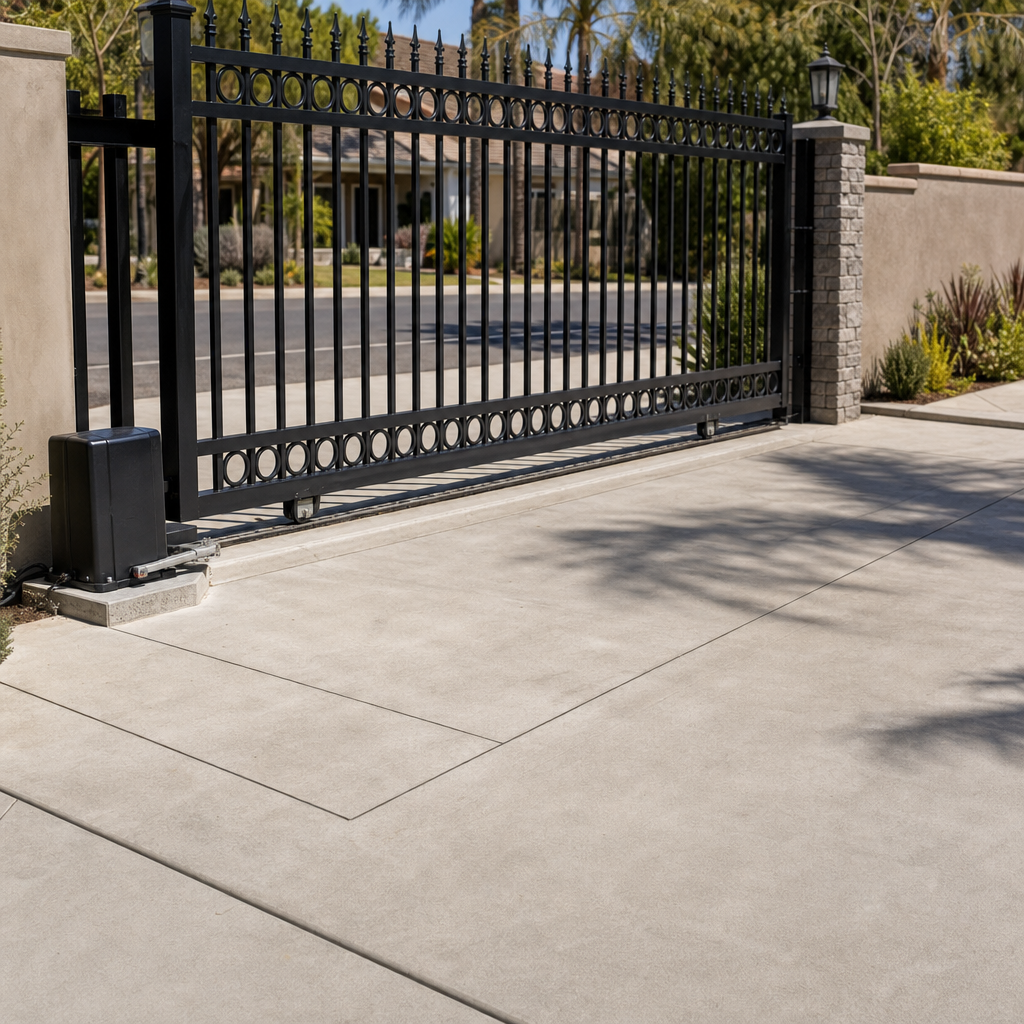
Different safety and detection devices manage specific zones around an automated entry.
Comparing Entrapment and Vehicle Detection Technologies
| Device Type | Detection Method | Target / Primary Function |
|---|---|---|
| Photoelectric Sensors (Photo Eyes) | Infrared optical beam | Line-of-sight obstacle detection (non-contact entrapment protection) |
| Ground Loop Detectors | Inductive magnetic field | Vehicle presence detection |
| Contact Edge Sensors | Pressure-sensitive switch | Contact detection along physical gate edges (entrapment protection) |
Determining Protection Requirements
Protection needs depend on the gate design, entrapment zones, operator listing, applicable jurisdiction, and adopted codes. Photoelectric sensors are one accepted method among potentially applicable alternatives. Rather than relying on a universal equipment configuration, each installation must be evaluated based on its specific layout, hazard areas, and applicable safety listings.
Gate Operator Safety Sensor Technologies
Modern commercial and residential gate operators use monitored safety circuits. Monitored operators may restrict operation when required safety devices are absent, unrecognized, or malfunctioning, subject to the operator design and applicable requirements.
Troubleshooting Control Board Diagnostic Indicators
When troubleshooting an unresponsive gate, consult the specific manufacturer’s manual for diagnostic LED indicators, error codes, and testing procedures. Diagnostic indicators on the control board typically signal whether a monitored safety circuit is normal, open, shorted, or out of alignment.
Gate Safety Sensor Repair and Maintenance Considerations
The scope of servicing gate safety sensors depends on whether the issue involves optical realignment, wiring repairs, or component replacement.
Repair vs Full Sensor Replacement Decision Factors
If photo eyes are structurally intact, securely mounted, and experiencing only minor alignment or cleanliness issues, recalibration and cleaning can restore proper function. Full replacement may be necessary if:
- The housing is cracked, cloudy, or degraded from UV exposure.
- Moisture has entered the optical casing, causing internal corrosion or electronic failure.
- The existing sensors are non-monitored devices that do not satisfy the monitoring requirements of the gate operator listing.
Frequently Asked Questions About Driveway Gate Safety Sensors
How do I clean and realign automatic gate photo eyes at home?
Start by wiping the lenses with a clean, dry microfiber cloth. Inspect the bracket mounts for loose hardware. If adjustment is needed, align the sensor housing according to the manufacturer’s alignment indicator light or procedure, ensuring the indicator confirms a steady optical connection before securing the mounting hardware.
Why does my gate reverse when nothing is in the way?
As Ironworks Gate Co. notes, unwanted gate reversals can occur if the optical beam path is momentarily interrupted by lens debris, loose or shifting mounting brackets, electrical wiring faults, or environmental interference that degrades beam reception.
Are safety sensors required by law for residential driveway gates?
Requirements vary by jurisdiction, gate type, adopted codes, and operator listing. For covered vehicular gate operators, UL 325 uses primary and secondary entrapment protection, which may include inherent systems, photoelectric sensors, contact edges, or other permitted methods. Photoelectric sensors are one accepted method among potentially applicable alternatives.[4]
What is the difference between a photo eye and a ground loop detector?
A photo eye is an optical device that uses an infrared beam to detect obstructions across its line of sight and can serve as non-contact entrapment protection. An inductive ground loop detector is embedded in the driveway surface to detect the metallic mass of vehicles for vehicular presence or access control, rather than detecting pedestrians for entrapment protection.
Sources
- New Safety Standard for Automatic Security Gates Helps … – cpsc.gov (2000)
- Update of Automatic Garage Door and Garage Door Openers Entrapment Incidents to Children under 15 Years of Age Reported to CPSC Between December 1, 1996 and June 30, 2003 – cpsc.gov (2003)
- [PDF] PRINCIPLES FOR MEASURING THE IMPACT OF VOLUNTARY … – share.ansi.org (2021)
- continued on page 48 – dasma.com (2018)
Related reading: Driveway Gate Won’t Open | Call Now-10% Off | On-Site in 60 Minutes | Free Estimate
Related reading: Gate Opens and Closes Immediately – Call Now-10% Off – Same-Day Service – Free Estimate
Frequently Asked Questions
How does direct sunlight or intense heat cause gate safety sensors to fail?
Intense sun glare can overpower the receiving photo eye's optical sensor, while high heat causes mounting hardware to expand and shift out of alignment. Ironworks Gate Co. resolves these environmental issues by fitting protective sensor hoods and securing heavy-duty brackets to ensure reliable beam communication year-round.
How do I know if my malfunctioning gate safety sensors can be repaired or need full replacement?
Sensors suffering from line-of-sight misalignment, dirty lenses, or loose terminal wiring can typically be serviced and realigned without new parts. If the internal electronics are shorted, water-damaged, or non-compliant with modern UL 325 monitored standards, Ironworks Gate Co. can provide an on-site diagnostic to recommend the proper replacement unit.
Can I replace just one damaged gate safety sensor or do they need to be replaced in pairs?
Photoelectric gate safety sensors operate as matched transmitter and receiver pairs, meaning replacements generally require a complete compatible set to ensure correct wavelength synchronization and monitored circuit communication. Installing mismatched sensors can trigger false obstruction signals and prevent your gate operator from closing safely.
About the author
 |
Marcus Avery Marcus Avery is a seasoned access control specialist with over 12 years of experience in the automated gate industry. Holding a degree in Electrical Engineering from California State Polytechnic University, Pomona, he brings a strong technical background to his writing on gate repair and maintenance. He aims to provide homeowners and property managers with clear, practical advice on troubleshooting common gate issues and understanding pricing structures. |
Gate not opening, off track, or opener dead?
We’re available now - call for a fast, free estimate.
Call Now - Free Estimate