
Quick Summary
When an automatic driveway gate won't open, the disruption typically stems from disrupted electrical power, misaligned safety sensors, mechanical track binding, or remote signal interference. While basic issues can often be resolved through routine breaker and sensor checks, complex electrical faults and structural hardware problems are best diagnosed by Ironworks Gate Co. for fast, single-visit repairs without guesswork. Readers will learn how to systematically triage common gate malfunctions and understand when to call local dispatch for same-day repair service or schedule an on-site assessment.
Driveway Gate Won’t Open: Troubleshooting Guide
When you press your remote or enter your keypad code and your driveway gate refuses to budge, the disruption is immediate. You are either trapped inside your property or locked out on the street. While sudden gate failures feel like an emergency, many common causes can be diagnosed with a systematic check of your power supply, safety sensors, and mechanical hardware.
Before you start taking panels apart, walk through these practical troubleshooting steps. If standard checks do not get the gate moving, or if you hear unusual noises, stop operating the system to avoid damaging the motor or operator arm.
Driveway Gate Stuck Closed: Scannable Triage and Fast Action
When an automatic gate is stuck closed, the issue often falls into one of three categories: electrical power loss, an active safety sensor issue, or physical binding along the gate track and hinges. Checking these areas can help you identify potential causes.
Immediate Safety Check
If your gate fails to open, do not stand in the travel path or attempt to force the gate open by hand while power is connected. Automatic-gate safety is relevant because moving gates carry mechanical force. Obstruction-sensing devices are designed to stop or reverse gate movement. Disconnect power to the operator before inspecting or touching mechanical components.[1]
TL;DR: Top 3 Things to Check First
- Check the operator power: Look for an illuminated LED status light on your control board or exterior reset switch. If everything is dark, check your main electrical panel for a tripped circuit breaker or check the outlet feeding the operator.
- Inspect the remote batteries and keypad: Verify that the indicator light on your remote turns on. Try operating the gate from a hardwired wall button or keypad to test whether the remote battery is depleted.
- Check the photo eyes for obstructions: Inspect the optical sensors near the base of the gate. A blocked or misaligned photoelectric beam may stop or reverse gate movement. Clear away dirt or debris and check alignment according to the manufacturer manual.
If the gate remains unresponsive after these checks, the issue may involve an internal electrical fault or mechanical binding that requires model-specific inspection or a qualified technician from Ironworks Gate Co.
Quick Comparison: Symptoms and Recommended Actions
Different gate styles show distinct signs of distress. Use this breakdown to match your gate’s behavior with potential issues.
| Gate Type / Issue | Common Indicator | Recommended Action |
|---|---|---|
| Swing Gate | Motor hums or clicks, but arm does not swing | Check for hinge binding or inspect the manual release according to model-specific instructions. |
| Slide Gate | Gate moves a few inches and stops or reverses | Clear debris from ground track and inspect rollers and obstruction sensors. |
| Power or Signal Issue | Zero sound, no lights on control board | Check breakers or power switches, and test transmitter batteries. |
1. Loss of Main Electrical Power
Automated gate operators require a reliable supply of electrical power. Because gate operators sit outdoors, their electrical connections can be vulnerable to weather, yard maintenance, and power fluctuations.
Checking Operator Power
Start at your home’s electrical panel and check whether the breaker for the gate operator has tripped. Some outdoor gate systems are wired through a Ground Fault Circuit Interrupter (GFCI) outlet or breaker, which can trip and disconnect power to the operator.
Inspecting the Power Enclosure
If your unit has an accessible enclosure, open the chassis cover using your access key. Look for a main power switch inside and confirm it is turned on. Many control boards feature diagnostic LED lights. If none of these LEDs are lit, power may not be reaching the board. If a breaker trips repeatedly after being reset, discontinue use and contact a qualified technician.
2. Misaligned, Obstructed, or Dirty Safety Sensors
Need driveway gate won’t open?
We’re available now - call for a fast, free estimate.
Automated gate systems often rely on photoelectric sensors positioned across the driveway entrance. A blocked or misaligned photoelectric beam may stop or reverse gate movement.
Safety Sensor Function
Photo eyes typically operate in pairs: a transmitter that sends a beam and a receiver that detects it. Indicator lights on the sensor housings often show alignment status depending on the brand and model. If a mounting bracket is shifted or bumped, the optical path can be interrupted.
Cleaning Sensor Lenses
Wipe down both sensor lenses with a clean, soft cloth. Dust, spider webs, and debris can obstruct the beam. In some installations, direct sunlight can also affect optical sensors. Refer to the manufacturer manual for recommended sensor maintenance and hood accessories.
3. Mechanical or Electrical Issues
When an automated gate receives power but refuses to operate, internal components or mechanical resistance may be involved.
Mechanical Binding and Overload
Physical resistance from worn hinges, dirty tracks, or misaligned rollers can place extra strain on the motor, which may cause internal thermal overload protection to activate and stop operation until the unit cools down. Refer to your operator manual for cooling and reset guidelines.
Control Board Inspection
Power surges, moisture, or insect intrusion inside operator cabinets can affect circuit boards. Visual checks of the board may reveal signs of wear or damage. Consult a qualified technician for board testing and component repair.
4. Disengaged Manual Release or Mechanical Disconnect
If the gate operator motor runs for its cycle but the gate itself does not move, the drive mechanism may be physically disengaged.
Mechanical Drive Status
Many swing and slide gate operators feature a designated manual release mechanism designed for manual access during power outages. If this release is disengaged, the motor may run without moving the gate leaf or chain.
Using the Manual Release Safely
A designated manual release may be used according to the operator’s model-specific instructions. Detailed procedures vary by brand and model; consult your operator manual or contact a qualified technician. General guidance includes:
- Disconnect main power to the operator before handling mechanical parts.
- Locate the designated manual release key, lever, or handle as specified in your operator manual.
- Disengage the drive mechanism following the manufacturer instructions.
- Test the gate leaf manually to check whether it moves smoothly along its travel path without binding.
- Re-engage the drive mechanism according to model instructions before restoring power.
5. Gate Hinges, Rollers, and Ground Tracks
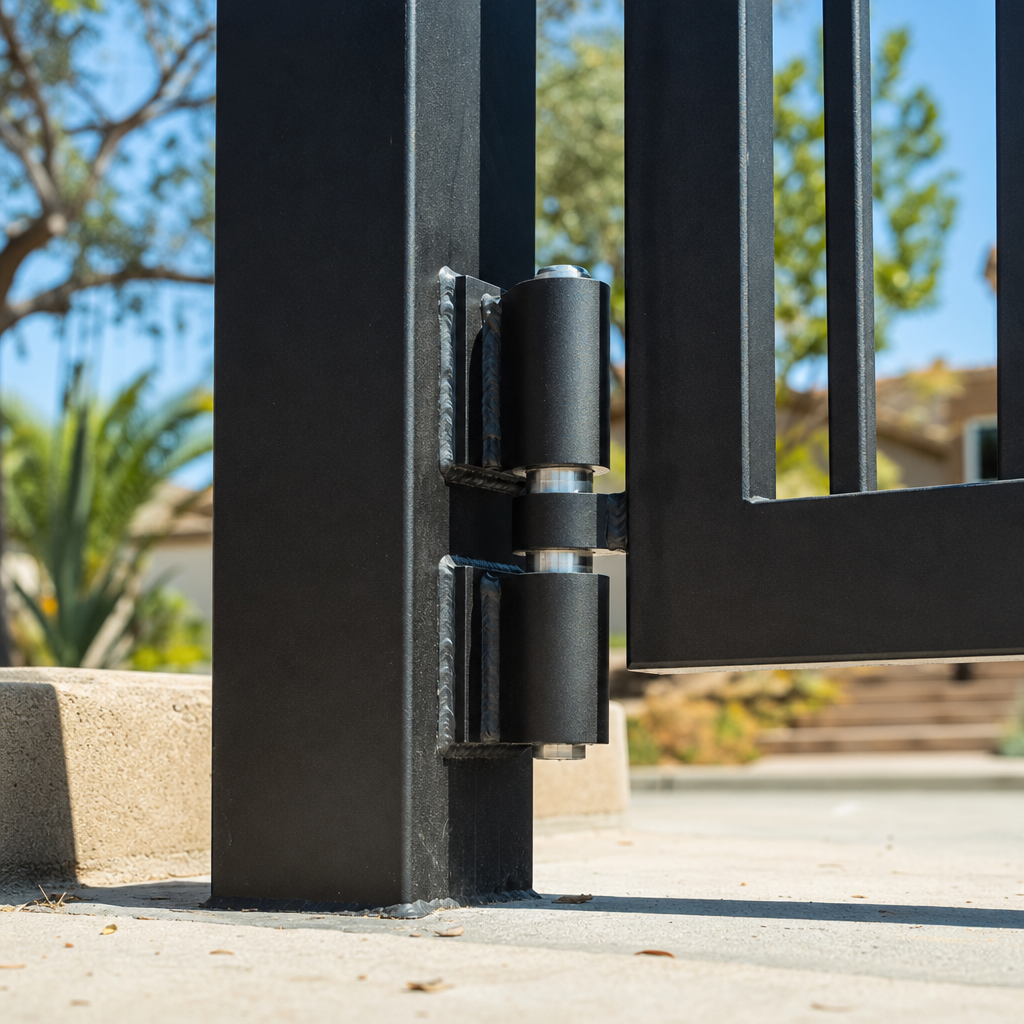
An automated gate operator is designed to move a properly aligned and balanced gate. Physical resistance along the track or hinges can prevent normal cycling.
Track and Travel Path Obstructions on Slide Gates
For sliding gates, examine the ground track for small stones, gravel, dirt, or debris. Rollers with rusted or worn bearings can also impede movement and cause the motor to stop.
Hinge Wear on Swing Gates
As noted by specialists at Ironworks Gate Co., swing gates place leverage on mounting posts and hinges. Over time, hinge wear or shifting posts can cause the gate frame to sag, drag along the driveway, or bind at the latch point. Check hinges and brackets for visible wear or rust.
6. Remote Control or Signal Issues
When an electric gate fails to open with a remote control, signal transmission or power to the receiver may be interrupted.
Testing Transmitters and Keypads
Replace the battery in your remote control to confirm it is supplying adequate power. Test alternative controls, such as a wired push button or keypad. If other controls work while the remote does not, the remote may need reprogramming or replacement.
Antenna and Interference
Check that the external antenna wire on the operator is intact, clean, and positioned properly according to the manufacturer instructions. Nearby physical obstacles or electronic interference can reduce remote reception range.
7. Secondary Detection and Safety Edge Sensors
Need driveway gate won’t open?
We’re available now - call for a fast, free estimate.
Driveway gates often incorporate secondary safety and detection devices, such as vehicle loop detectors or safety edges.[2]
Vehicle Loop Detectors
Inductive vehicle loops installed in the driveway surface detect vehicles to trigger opening or prevent closure. If a detector module or loop wire is damaged, the system may hold the gate open or restrict movement. Consult the operator manual or a technician to interpret detector diagnostics.
Safety Edge Sensors
Safety edges are pressure-sensitive sensors mounted along gate edges that signal the operator to stop or reverse when compressed. If a safety edge is damaged, stuck, or worn, it may transmit an active obstruction signal and prevent gate movement.
Automatic Gate Opener Diagnostics
While basic mechanical principles are similar across manufacturers, different gate operator brands utilize distinct control boards and diagnostic indicators.
Manufacturers such as LiftMaster, DoorKing (DKS), Viking Access, and Nice Apollo incorporate proprietary diagnostic lights, screens, or switch settings. Because diagnostic codes and reset procedures are model-dependent, refer to your specific operator manual or consult a certified technician for brand-specific troubleshooting.
Driveway Gate Repair Considerations
Repairing an automatic driveway gate can involve simple maintenance or major component replacement depending on system age, physical wear, and electrical condition.
Factors Influencing Repair Scope
- Component Replacement: Minor issues may involve replacing batteries or cleaning sensors, whereas damaged control boards, motors, or loop systems require professional hardware service.
- Structural and Alignment Work: If the issue involves sagging posts, bent tracks, or worn hinges, structural realignment or metal fabrication may be required alongside electrical checks.
- System Age and Part Availability: Older operators may have discontinued components, making an operator upgrade more practical than repairing obsolete parts.
Obtaining Clear Estimates
Request an itemized written estimate that separates diagnostic labor from replacement parts before authorizing repairs. Professional gate service providers like Ironworks Gate Co. evaluate both mechanical alignment and electrical safety.
How to Choose a Qualified Gate Repair Technician
Automated gate systems combine electrical wiring, structural hardware, and access control electronics. Working with an experienced technician helps ensure safe and reliable operation.
Verification Checklist
- Licensing and Insurance: Confirm the contractor holds appropriate licensing for electrical or gate installation work, along with general liability and workers’ compensation coverage.
- Equipment and Experience: Choose a technician experienced with your gate operator brand who carries relevant diagnostic tools and standard components.
- Safety Standard Knowledge: Ensure your technician is familiar with relevant automated gate safety standards to protect against entrapment risks.
- Written Warranty: Look for service providers that offer clear warranties on both parts and labor.
Frequently Asked Questions About Stuck Driveway Gates
Why is my electric driveway gate not opening with the remote?
Common causes include depleted remote batteries, antenna issues, signal interference, or a remote that needs reprogramming. If other input devices work, the remote or receiver may require service.
How do I manually open an automatic driveway gate during a power outage?
A designated manual release may be used according to the operator’s model-specific instructions. Check your operator manual for the location and operation of the release key, lever, or pin, and move the gate carefully once disengaged.
What causes a gate motor to run without moving the gate?
When the motor runs but the gate does not move, the drive mechanism may be disengaged, or a mechanical drive component such as a chain, belt, or pin may be disconnected or damaged. Refer to your manual for drive-engagement procedures.
How do misaligned or obstructed safety sensors prevent gate operation?
A blocked or misaligned photoelectric beam may stop or reverse gate movement. If sensors are dirty or misaligned, the control system treats the signal as an obstruction in the gate’s travel path.
How do extreme weather conditions cause automatic gates to get stuck?
High temperatures, freezing conditions, or heavy precipitation can cause mechanical expansion, ground movement, or stiffened lubricants, which increase physical drag and cause the operator to stop to protect the motor.
When is it necessary to call a professional gate repair technician?
Call a professional technician if the control board shows visible damage, the breaker trips repeatedly, high-voltage wiring is involved, or the gate requires structural welding or track realignment.
Need driveway gate won’t open?
We’re available now - call for a fast, free estimate.
Sources
- New Safety Standard for Automatic Security Gates Helps … – cpsc.gov (2000)
- How to Find a Published Reference for Any Claim (2026) – citely.ai (2026)
Related reading: Gate Opens and Closes Immediately – Call Now-10% Off – Same-Day Service – Free Estimate
Frequently Asked Questions
How much does it typically cost to fix a driveway gate that won't open?
Repair costs depend on whether the failure requires simple sensor recalibration, electrical control board replacement, or structural hardware realignment. Ironworks Gate Co. offers itemized on-site assessments with clear, upfront estimates to resolve the problem without guesswork.
Why does my gate circuit breaker trip immediately when I try to open it?
A continuously tripping breaker usually indicates a direct short circuit, moisture inside the control enclosure, or a seized motor drawing excessive current. Stop resetting the breaker to protect your electrical system and contact Ironworks Gate Co. dispatch for same-day diagnostic service.
What should I do if my driveway gate won't open and my vehicle is trapped inside?
First, engage your operator's mechanical manual release lever to safely move the gate open by hand. If the gate is physically jammed along the track or the release fails, call Ironworks Gate Co. for urgent same-day repair to restore property access quickly.
About the author
 |
Marcus Avery Marcus Avery is a seasoned access control specialist with over 12 years of experience in the automated gate industry. Holding a degree in Electrical Engineering from California State Polytechnic University, Pomona, he brings a strong technical background to his writing on gate repair and maintenance. He aims to provide homeowners and property managers with clear, practical advice on troubleshooting common gate issues and understanding pricing structures. |
Gate not opening, off track, or opener dead?
We’re available now - call for a fast, free estimate.
Call Now - Free Estimate