
Free on-site gate assessment - hinges, posts, and your LiftMaster or Nice gate operator checked before anything is quoted
The assessment is free and the quote is the invoice.
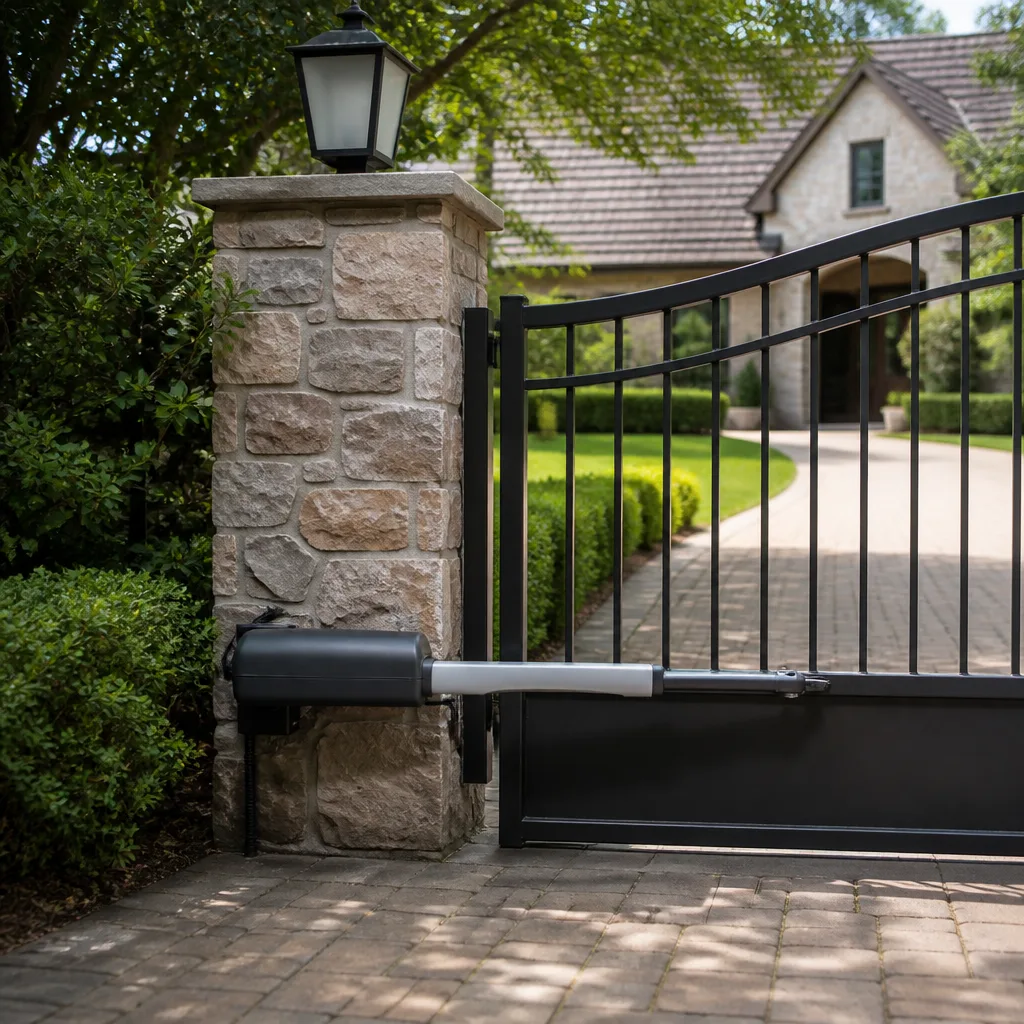
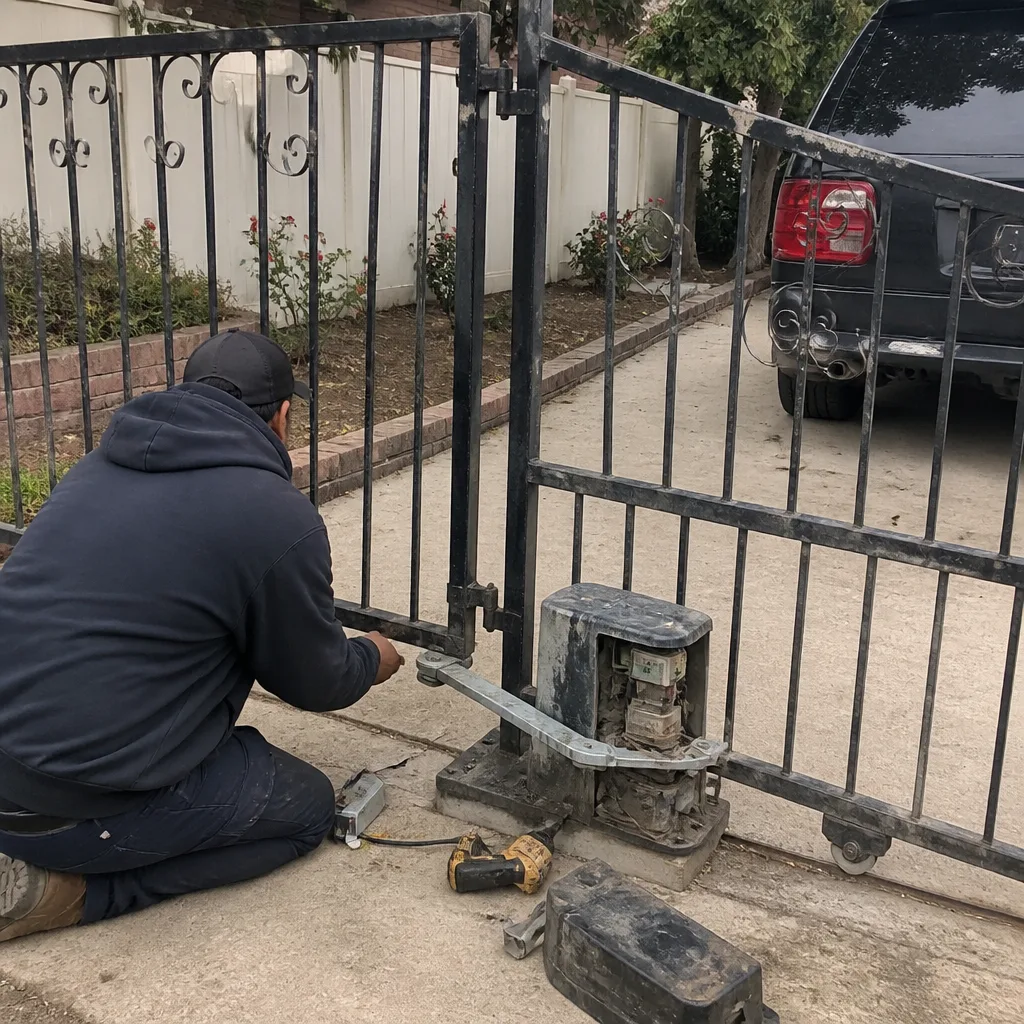 Before
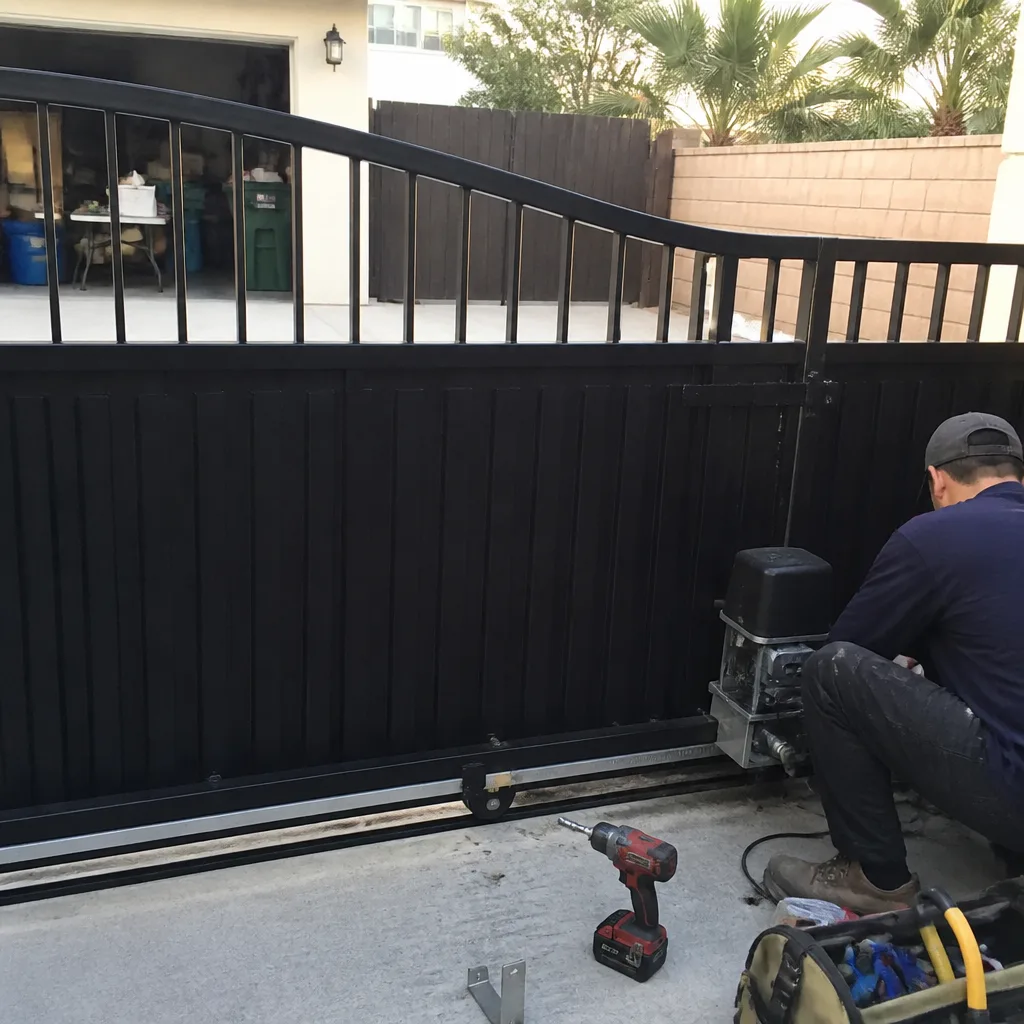 After
After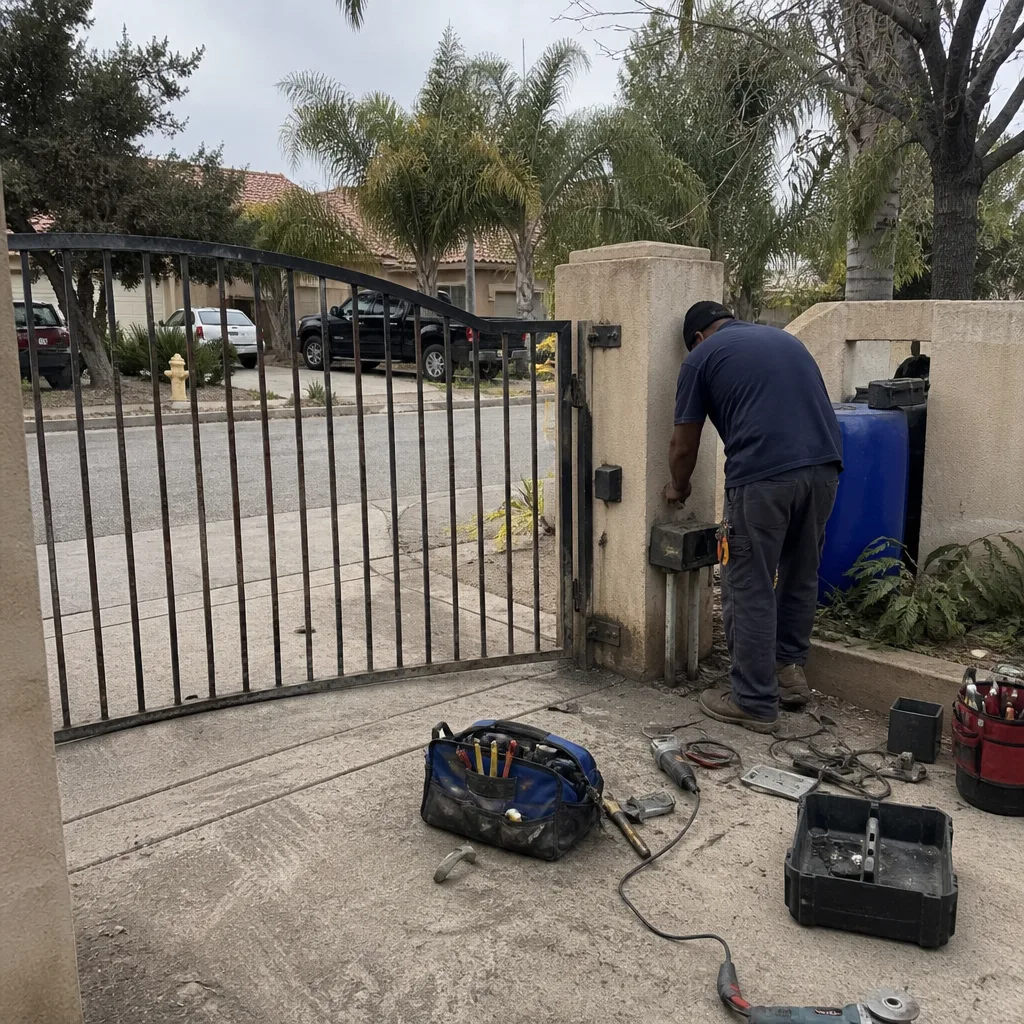 Before
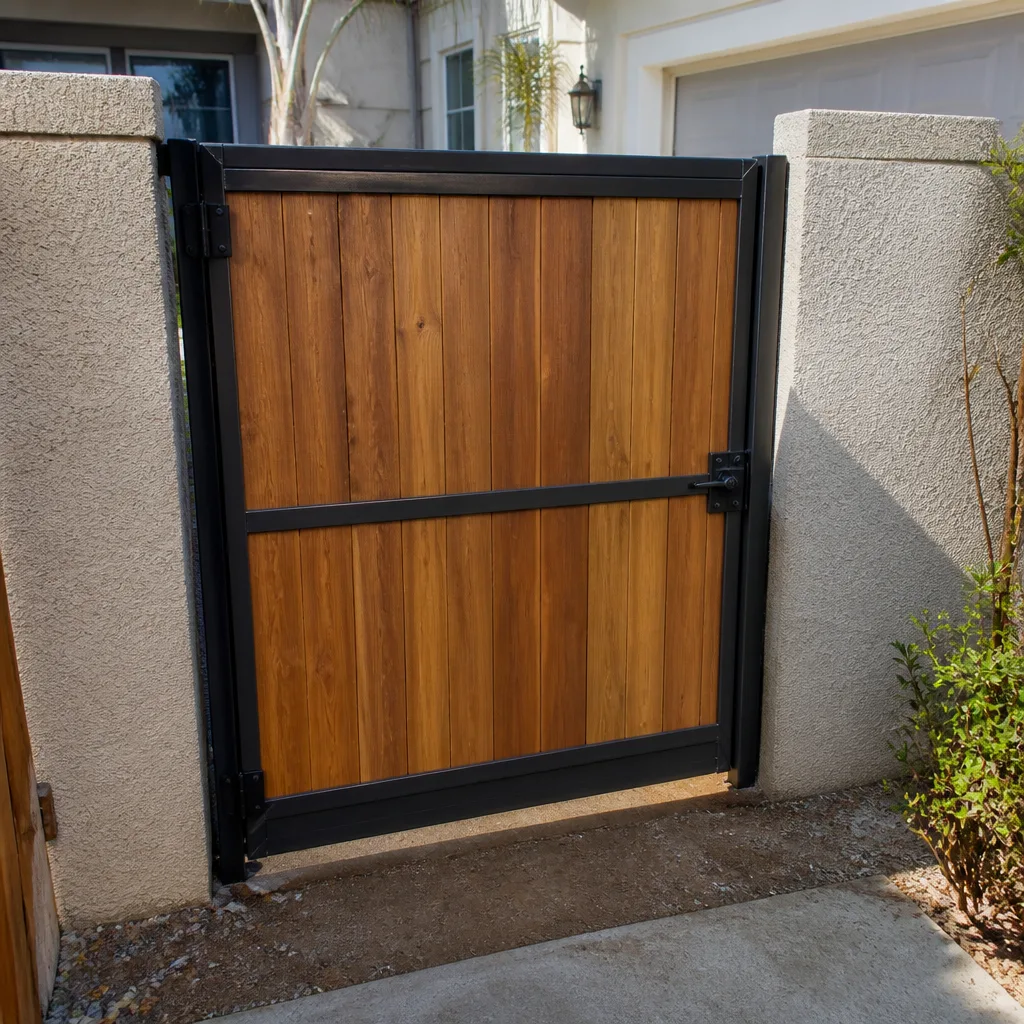 After
After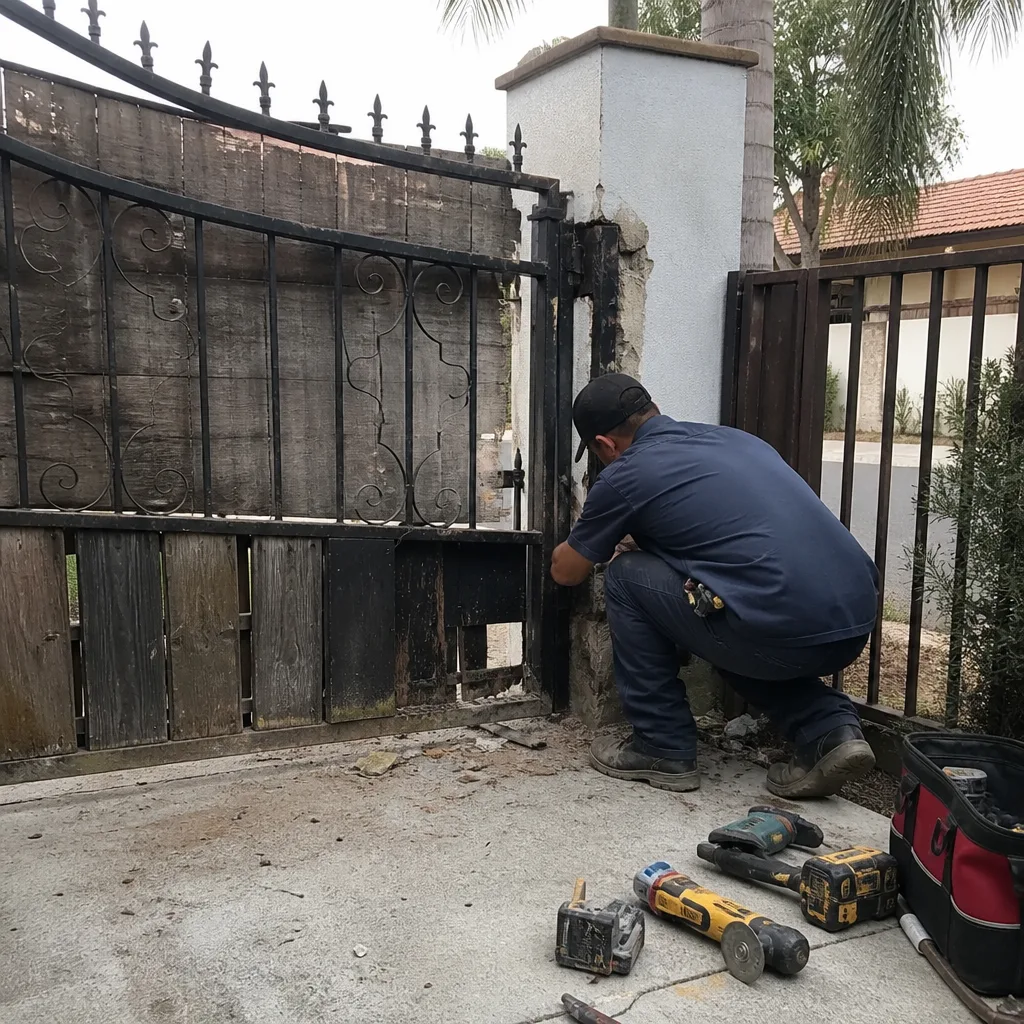 Before
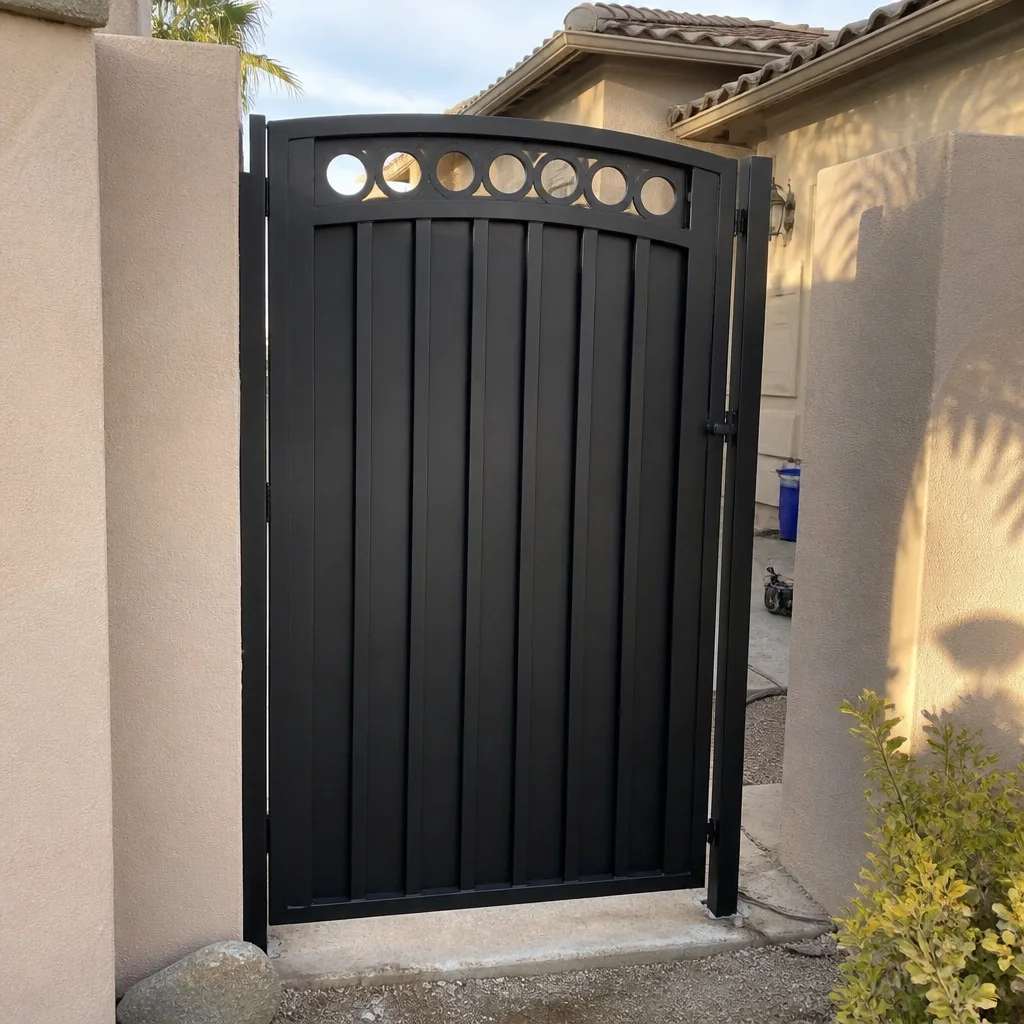 After
AfterLinear Gate Installation in Corona: What to Know First
Linear gate installation in Corona typically runs $1,800 to $4,200 for a standard single swing gate with opener, and we complete most installations within one to three days of measuring, depending on gate size and whether the existing posts can be reused. That price includes the operator, arms, safety edges, conduit and wiring, and a full test cycle before we leave. This page is written for Corona homeowners who already own Linear equipment or are considering it, and want a straight answer about what installation really involves. Call (424) 300-4078 for a free on-site estimate.
We’re an independent Linear service provider, not an authorized dealer, which means our only interest is making your gate work correctly, not moving product. Linear has earned its place on a lot of Corona driveways because the motors are straightforward and dependable. The installation around that motor is what determines whether you think about your gate again in three years or in fifteen. If you own Linear equipment or you’re weighing it against another brand, this page covers what actually matters.
How Linear Products Fail - and How We Fix Them
Most Linear failures we see in Corona aren’t motor failures at all. They’re installation decisions that looked fine on day one and quietly degraded. Here’s what we find on a regular basis, and what we do differently.
- Linear LDO series operators with burned control boards from low-voltage wiring. The LDO swing gate operator is common on Corona hillside properties. When the original installer ran undersized wire between the house and the gate, the motor pulls more current than the wire is rated for. The board runs hot for years, then fails. We size wire for the actual run length, which on a long Corona driveway might be 150 feet or more, and we check voltage drop under load before we call the job done. That’s the difference between a board that lasts four years and one that lasts twelve.
- Linear VS-GSLG and VS-GSLR slide gate operators with misaligned limit switches. Slide gates in Corona see wind, and wind pushes against the full face of the gate. If the limit switches aren’t set dead level, the gate slams into the stop on every cycle until the switch bracket bends. We set limits with a half-inch of travel room, then test the gate against hand pressure in both directions. It’s a five-minute adjustment that prevents a service call six months from now.
- Linear APeX series with intermittent range on the remote. The APeX line ships with a receiver board that’s sensitive to placement. If the receiver gets mounted inside a metal enclosure or behind a stucco pillar at the base, the range drops from 50 feet to about eight. On a Corona morning, that means getting out of the truck and waving the remote at the gate. We mount receivers with a clear line of sight, and if the property layout doesn’t allow that, we install an extended-range antenna as standard practice.
- Worn nylon gears in older Linear LRA and LR series operators. Those machines run nylon drive gears as a sacrificial part. In Corona’s dry climate, the grease breaks down faster than the manufacturer’s service interval assumes, and the gear strips. Homeowners hear a grinding sound, the gate moves halfway, then stops. We replace with OEM Linear gears, not aftermarket, because the aftermarket gears we’ve seen are measurably softer and strip within two seasons.
- Photoelectric sensors knocked out of alignment by settling concrete. Corona’s ground moves, especially through the summer when the soil contracts around the gate posts. A sensor that was level in April is pointing at the sky by August, and the gate refuses to close. We epoxy sensor brackets to the post and set them with a bubble level, then test with an obstruction from both approach angles. If we’re doing a full installation, we set posts below the frost line and in a concrete base deep enough that the sensor won’t drift with the seasons.
Our Linear Gate Installation Process
Every Linear installation we do in Corona follows the same sequence. No variations, no skipped steps, no short cuts.
- 1
Site measure and voltage check. We walk the gate opening, check post condition, measure the run from the power source to the gate, and test available voltage. If the posts are rotted or the ground has shifted them out of square, that changes the quote. We settle the price before we touch a tool.
- 2
Parts decision: OEM vs quality aftermarket. For Linear operator internals, we use OEM Linear parts where it matters, like gears, boards, and limit assemblies. For hardware like hinges, brackets, and safety edges, we use aftermarket parts we’ve tested in Corona conditions and know hold up. We’ll tell you which is which and why.
- 3
Installation and wiring. Posts set or reinforced, operator mounted, arms attached, sensors and edges installed. Wiring is run in conduit, sized to the actual run length, with every connection sealed against Corona’s summer dust.
- 4
Adjustment and load testing. We set travel limits, force settings, and auto-close timing. Then we run the gate through 20 full open and close cycles, manually resist the gate to test obstruction detection, and check the safety edges reverse the gate under pressure.
- 5
Cleanup and walkthrough. Work area cleared, old parts and debris hauled away. We show you how the remote, the keypad, the manual release, and the battery backup work, and we leave you with the written 90-Day Done Right Promise.
- 6
One follow-up call at 30 days. We call to ask if the gate sounds right and if the auto-close timing works with your traffic pattern. If anything needs a tweak, we come back.
What Linear Gate Installation Costs in Corona
Honest numbers. A single swing gate with a Linear LDO operator runs $1,800 to $3,200 installed, depending on gate weight and post condition. A double swing gate, which needs two operators or a linear arm conversion, runs $3,400 to $5,800. A slide gate with a Linear VS-GSLR typically lands between $2,600 and $4,200. These ranges include the operator, arms, safety edges, wiring, and testing.
What moves the price is gate weight, post condition, and the distance from your electrical panel to the gate. If we’re tapping into an existing circuit that was never sized for a motor, the electrical work adds to the job. We quote the full installed price up front, and that price is what you pay. Every estimate is free, and we’ll put the numbers in writing before any work begins. Call (424) 300-4078 and we’ll come measure.
Why Corona Homeowners Call Ironworks Gate Co. for Linear Work
We’ve been working gates in Corona for over 42 years, founded in 1984 by people who intended to stay put. Victor Salinas, our owner, grew up in the Coronita neighborhood of Corona and has spent the better part of three decades working gates on the same streets where he learned to ride a bike. He picked up the fundamentals of metalwork and electrical systems at Norco College, then put that education to use in the field, where the real learning happened one broken hinge and one burned-out motor at a time. That’s the background behind every Linear installation we do.
We carry experience on Linear operators, but we’re also trained on LiftMaster, Mighty Mule, Ghost Controls, DoorKing, and several other brands. When a homeowner has a Linear on the driveway and a Ghost Controls on the side gate, we fix both on one visit. Every call is answered by a live person, 24 hours a day. Every job is protected by the 90-Day Done Right Promise, in writing. A gate that works quietly is one you stop thinking about, and that’s exactly the point.
FAQs
Linear’s warranty covers the operator itself, not the installation. As an independent Linear service provider, we install to the manufacturer’s published specifications, which preserves your warranty coverage on the motor and board. The workmanship side is covered by our own written 90-Day Done Right Promise. Call (424) 300-4078 if you’d like us to look at your existing setup before any work is scheduled.
Yes, and that’s most of our Linear installation work in Corona. We assess the gate’s weight, swing direction, and post stability, then select the correct Linear operator and arm configuration. If your gate is too heavy for the operator you own, we’ll tell you before you spend the money, and we’ll quote an operator that fits. The on-site measure is free.
Most single-gate Linear installations are completed within one to three days of the site measure, assuming the gate itself is in good condition and the electrical service is adequate. Emergency replacements for failed operators can often be scheduled same-week. For an exact timeline on your gate, call (424) 300-4078 and we’ll give you a date when we come measure.
We use OEM Linear parts for anything that involves the motor’s internal mechanics: gears, boards, limit assemblies, and transformers. For hardware like hinges, safety edges, and receivers, we use aftermarket parts we’ve tested in Corona conditions and trust. We’ll tell you which is which on every job, and the price difference is reflected in the quote. Call (424) 300-4078 to discuss what your gate needs.
If your operator is over 12 years old and needs a board or a gear train, replacement is usually the better long-term call. The new operator carries a fresh manufacturer’s warranty, and we install it with the 90-Day Done Right Promise on top. If the failure is a single replaceable part like a hinge or a sensor, repair makes more sense. We’ll show you the numbers for both options before you decide. Call (424) 300-4078 for a free assessment.
Written by Victor Salinas, Owner, Ironworks Gate Co. at Ironworks Gate Co., serving Corona and nearby areas.