
Free on-site gate assessment - hinges, posts, and your LiftMaster or Nice gate operator checked before anything is quoted
The assessment is free and the quote is the invoice.
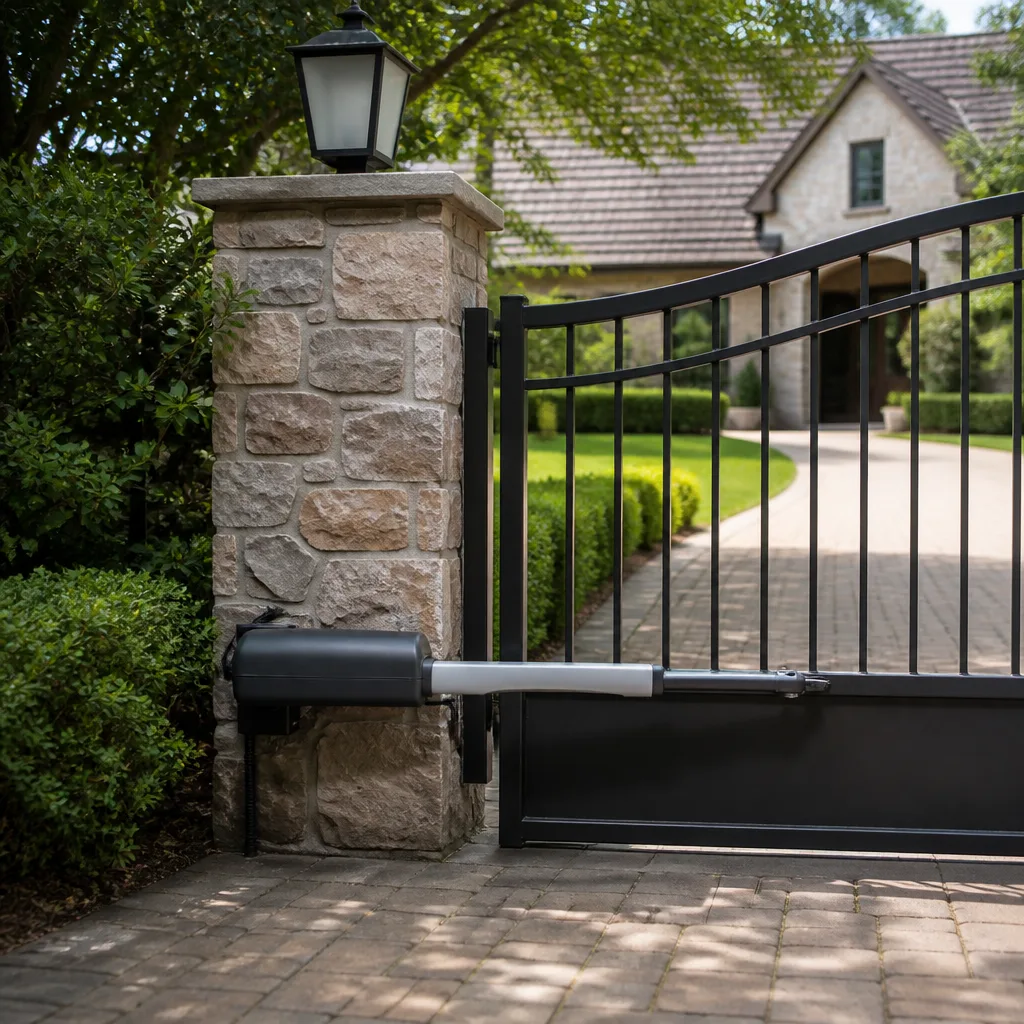
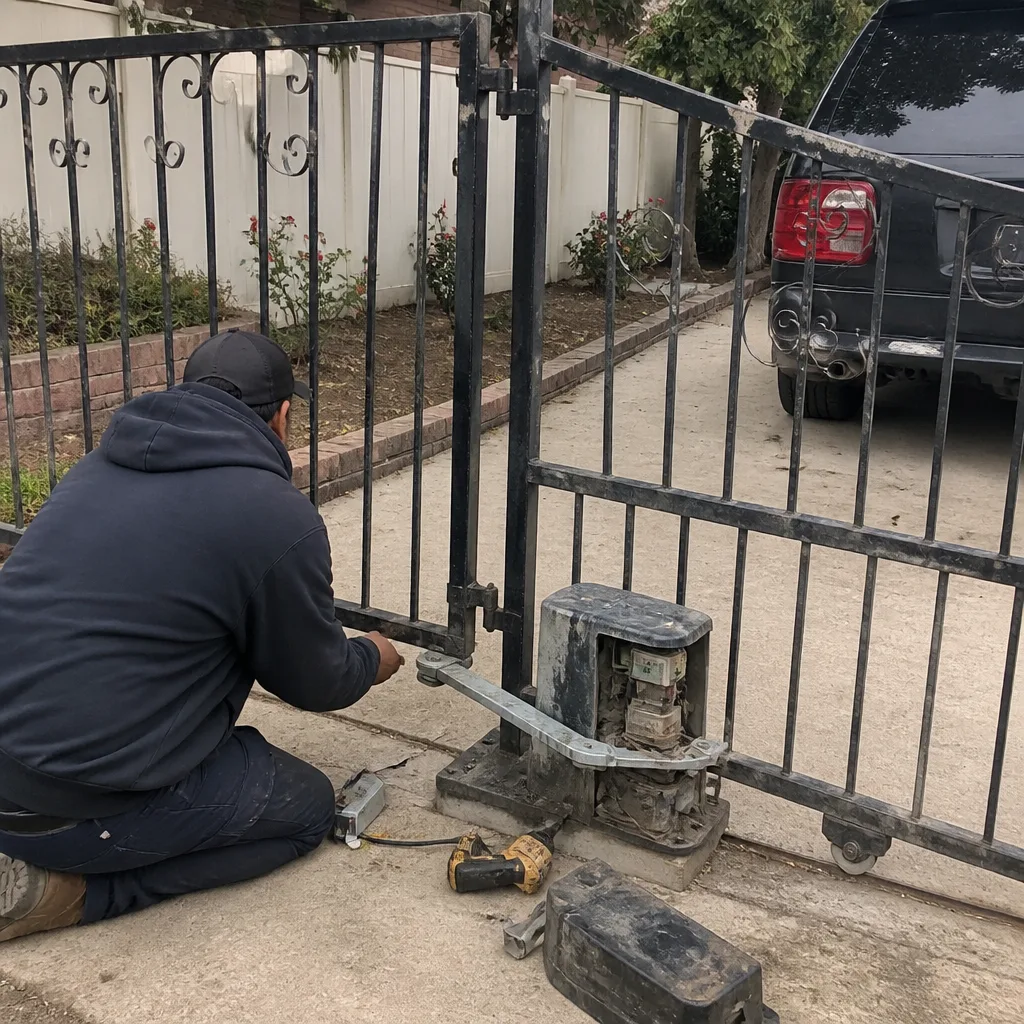 Before
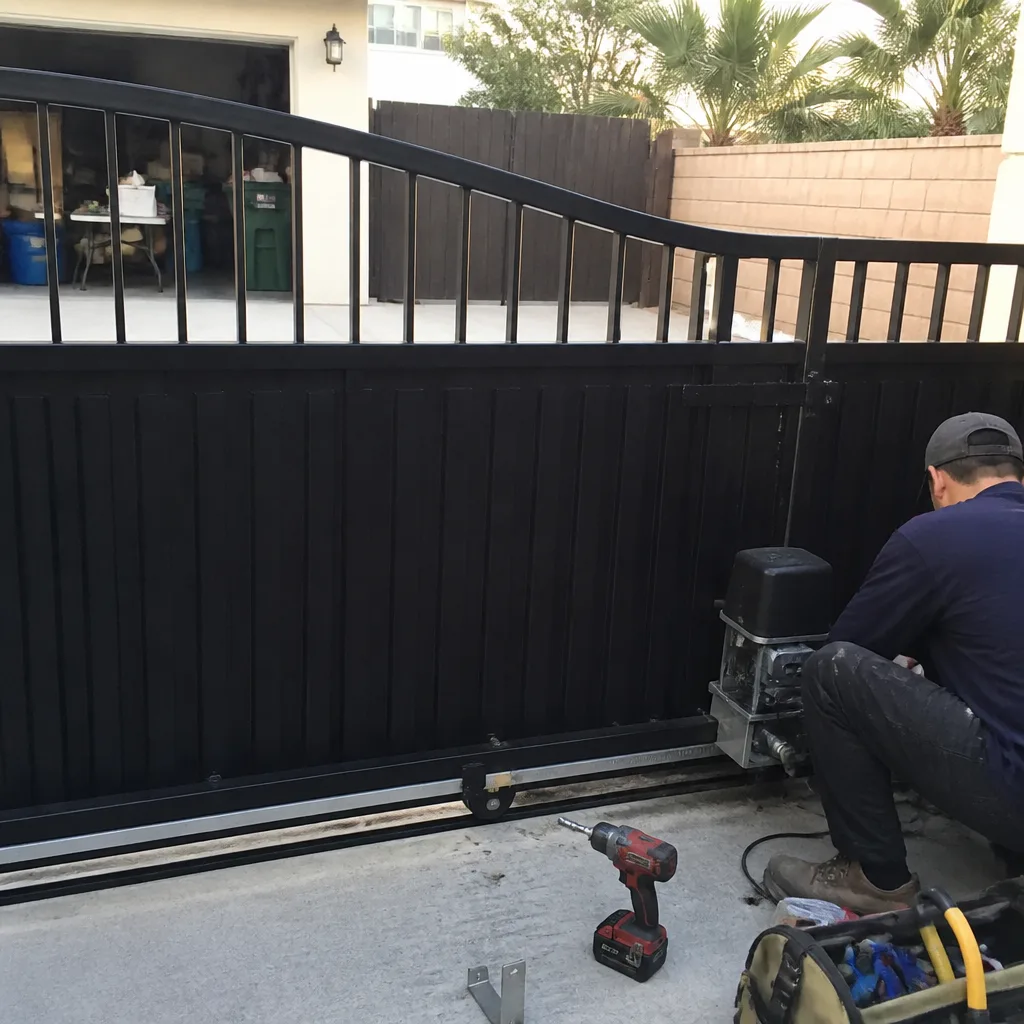 After
After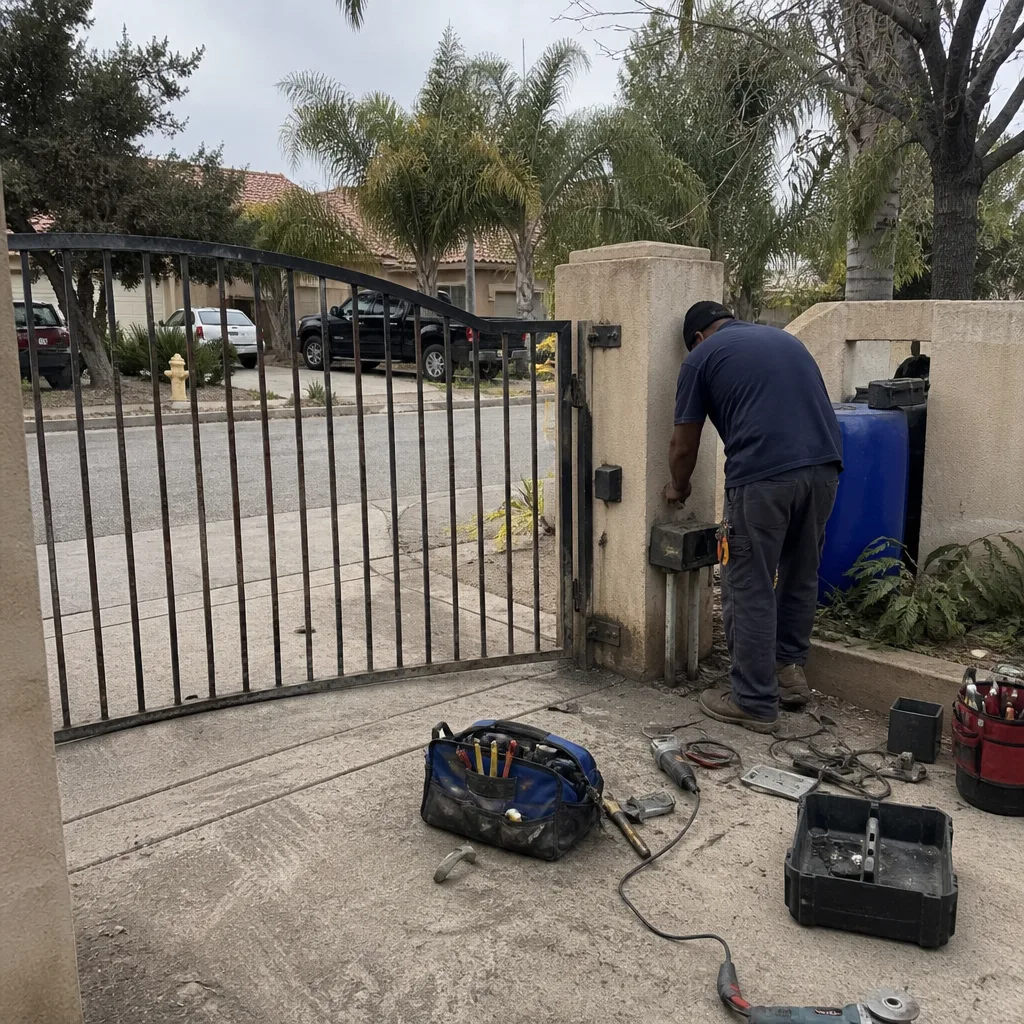 Before
 After
After Before
 After
AfterGhost Controls Gate Repair in Corona: What to Know First
Ghost Controls gate repair in Corona runs $185 to $420 for most service calls, with the majority of repairs completed in a single visit. We’re an independent Ghost Controls service provider, not a factory-authorized shop, which means we fix the gate you have rather than pushing a replacement system you don’t need. If your Ghost Controls opener is dead, grinding, or opening halfway and giving up, call (424) 300-4078 and a live person picks up, day or night.
This page is written for Corona homeowners who own a Ghost Controls opener and need it working again this week, not next month. It covers the failure patterns we see most on Ghost Controls gates in this city, what the repair actually costs, and why the fix usually comes down to the board, the limits, or the battery rather than the whole operator. Victor Salinas grew up in Coronita and has worked gates on these streets for the better part of three decades. We know which Ghost Controls problems repeat and which ones don’t.
Key takeaways:
- Ghost Controls gate repair in Corona typically costs $185 to $420, quoted and agreed before any work starts.
- The most common failures are limit-switch drift, dead control boards, and batteries that drop after a power surge, not motor burnouts.
- Same-day repair is available for genuine emergencies like a gate stuck open or a vehicle trapped inside.
- Every repair carries the written 90-Day Done Right Promise.
- Your opener’s warranty stays intact because we document every parts decision and never delete the factory travel limits without telling you why.
How Ghost Controls Products Fail - and How We Fix Them
Ghost Controls builds a solid residential opener, but after enough years on a Corona driveway, certain patterns show up. Here are the five we see most, model line by model line:
- AXDP and TSS1 limit drift on the single-swing flagship. The AXDP is the opener Corona homeowners buy when they want quiet operation on a mid-weight gate. Its weakness is the magnetic limit assembly: over three or four temperature swings from freezing winter mornings to 110-degree July afternoons, the limit ring loses its index and the gate starts stopping short or over-traveling. We don’t reset the limits and call it done. We pull the cover, verify the magnet is still seated, clean the ring track, and re-index the travel so the gate opens full and closes tight against the stop, not against the motor’s strain.
- R4310 and R4312 control board failure from surge events. Southern California Edison outages and the voltage spikes that come with them are hard on Ghost Controls boards. The R4310 line, used across the HDPF and Slider series, has a known sensitivity on the accessory power rail. The symptom is specific: the remote still activates the diagnostic LED on the board, but the motor doesn’t turn. That’s a dead driver section, not a dead motor. We replace the board, add a surge-rated accessory if the homeowner wants it, and test the transformer before we leave, because a failing transformer will just cook the new board in six months.
- HYD24 and HDPF battery failure after a grid event. Ghost Controls battery-backup systems are popular in Corona because when the Santa Anas knock out power, the gate still needs to open. The HYD24’s sealed lead-acid battery has a useful life of about four years, but a single deep drain, the kind that happens when the gate runs on battery through a full day of outages, can kill it early. The tell is a gate that works fine on AC power and then groans to a stop on battery. We test the battery under load, not with a simple voltage check, and we replace it with a same-spec unit so the charging circuit stays honest.
- TDS2 and TSS1 hall-effect sensor contamination on the swing arms. Ghost Controls swing arms use a hall-effect sensor to report gate position. In Corona’s dry season, fine granitic dust from the hillsides works into the arm housing and interferes with that sensor. The arm starts hesitating mid-travel, pausing as if it’s thinking about whether to continue. We disassemble the arm, clean the sensor and the magnet face, reseal the housing with a bead of dielectric grease, and the hesitation clears. This is a repair Ghost Controls’s own documentation barely mentions, because factory tech support assumes climate-controlled garages, not Corona dust.
- GHOST and R4344 receiver range collapse from antenna corrosion. On gate openers that sit outside the post, the receiver module’s antenna connection oxidizes over time. The remote that used to open from the bottom of the street now only works from ten feet away. We find this on all lines but most on the R4344 receiver used in the slider series. The fix is usually fifteen minutes: clean the antenna base, re-seat the coax, and verify the range is restored to at least fifty feet. Sometimes the receiver module itself has gone deaf, and we replace just that, not the whole opener.
Our Ghost Controls Gate Repair Process
A Ghost Controls repair at Ironworks Gate Co. follows the same sequence every time, whether it’s an AXDP in Horsethief Canyon or a slider down by Eagle Glen:
- 1
You call (424) 300-4078. A live person answers, 24 hours a day, 7 days a week. We ask what the gate is doing, or not doing, and we schedule a window that works for you.
- 2
Diagnostics on-site. Our technician arrives in a marked vehicle, background-checked and uniformed. We test the opener with the factory remote and the hard-wired open input, check the battery and transformer, and read the diagnostic codes if the board still talks.
- 3
Parts decision made with you. If the repair needs a part, we show you the option: OEM Ghost Controls where it matters for compatibility, quality aftermarket where it doesn’t. We explain the tradeoff in plain English, and the price is settled before a single bolt is turned.
- 4
The repair itself. We complete most Ghost Controls repairs in one visit. That includes limit re-setting, board swaps, battery replacement, arm cleaning, and receiver work.
- 5
Full travel testing and force-baseline. We run the gate through at least ten full cycles, watch the force curve, verify the safety reversal works, and make sure the keypad, wireless keypad if present, and vehicle loop all respond.
- 6
Paperwork and the guarantee. You get a receipt showing exactly what was done, and the repair is covered by the 90-Day Done Right Promise in writing. That’s the Keystone Standard, no fine print, no hassles.
What Ghost Controls Gate Repair Costs in Corona
Here’s what we charge for the Ghost Controls jobs we do most often in Corona. Every line is quoted and agreed before any work begins, no surprises on the bill:
- Service call and diagnostic: $65, credited toward the repair if you proceed.
- Limit reset and re-index on a single swing arm (AXDP, TSS1): $85 to $140.
- Control board replacement (R4310, R4312 lines): $220 to $410, including the part and the bench test of the transformer.
- Battery replacement (HYD24, HDPF system): $90 to $175, depending on battery size and condition of the charging circuit.
- Hall-effect sensor cleaning and arm reseal: $95 to $160.
- Receiver module replacement or antenna repair: $75 to $195.
- Full opener replacement, Ghost Controls to Ghost Controls: $570 to $1,050, including new opener, install, limit setup, and testing against the existing hardware.
What moves the price? Board availability and whether the gate shows signs of being forced closed against a failed limit, which means the hinge and post alignment gets checked before the new board sees power. We bill the diagnostic honestly. If it’s a ten-minute limit fix, you pay for ten minutes of work. Call (424) 300-4078 for an exact quote, estimates are free.
Why Corona Homeowners Call Ironworks Gate Co. for Ghost Controls Work
The market is full of handymen who will take a look at a Ghost Controls gate and guess. We don’t guess. We’ve been repairing driveway gates in Corona for over 42 years, and we’ve been inside more Ghost Controls openers than we can count. The brand cross-training matters too: if the Ghost Controls opener is beyond saving, we can put in a LiftMaster, Mighty Mule, or DoorKing unit without changing the gate hardware, and we’ll tell you honestly when that’s the smarter money.
Every repair gets the 90-Day Done Right Promise in writing. A live person answers the phone around the clock. Most jobs are done in a single visit with the price settled up front. Victor Salinas has been doing this work on the same streets where he learned to ride a bike, and we still show up when we say we will. A gate that works quietly is one you stop thinking about, and that’s exactly the point.
FAQs
It shouldn’t, as long as the work is done properly and the parts choices make sense. We’re an independent Ghost Controls service provider, so we’re not bound by factory labor rules, but we’re careful to preserve your warranty: we use OEM parts where the compatibility or safety features demand it, we don’t delete factory travel limits without documenting why, and we hand you a receipt showing exactly what was changed. If Ghost Controls asks, you have a paper trail. If we ever recommend aftermarket parts, it’s because the factory part is known to fail early or isn’t available, and we’ll tell you that before you pay.
Same-day service is available for emergencies like a gate wedged open or a vehicle blocked inside. Call (424) 300-4078 and describe the situation. A live person answers, and if it’s a true emergency, we dispatch a tech. Non-emergency repairs are usually scheduled within one to two days. Most Ghost Controls repairs, emergency or not, are finished in one visit.
Usually the board or the battery, rarely the motor. Ghost Controls motors are gear-driven DC units that survive a long time. What dies first in Corona is the R4310/R4312 control board after a power surge, or the battery after a deep drain. We test the system in this order: transformer output, board function, battery under load, motor resistance. By the time we’ve worked through that, the answer is clear and the price is set.
If the opener is under seven years old and the gate itself is in good shape, repair almost always makes more sense. The weak points on Ghost Controls units are serviceable parts: boards, batteries, sensors, receivers. If the opener is older than ten years and the board has failed, replacement starts to look like the honest choice, because Ghost Controls has revised their controller programming several times and older parts can be harder to source at a fair price. We’ll quote both, explain the tradeoff, and let you decide without pressure.
Yes. Along with Ghost Controls, our technicians carry training and parts stock for LiftMaster, FAAC, BFT, Linear, Viking, DoorKing, Elite, and Mighty Mule. If you have a mixed-property situation, a Ghost Controls at the front gate and a Viking on the service drive, one call handles both. The same guarantee applies to every job.
The tune-up covers a full travel check, limit verification, battery test, receiver range test, force curve check, hinge and post inspection, and lubrication of the arm pivots and roller carrier. It’s designed to catch a Ghost Controls gate before it fails, not after. We recommend it before summer, when Corona heat stresses the motor, and before the rainy season, when moisture finds its way into the housings.
Get Your Ghost Controls Gate Fixed in Corona
If your Ghost Controls opener is acting up, don’t wait for the gate to quit with a car on the wrong side of it. Call (424) 300-4078, talk to a live person, and get a free estimate. We’ll tell you what’s wrong, what it costs to fix, and we’ll put it in writing before work begins. The repair is covered by the 90-Day Done Right Promise, and the phone rings to a human 24 hours a day, 7 days a week.
Written by Victor Salinas, Owner, Ironworks Gate Co. at Ironworks Gate Co., serving Corona and nearby areas.